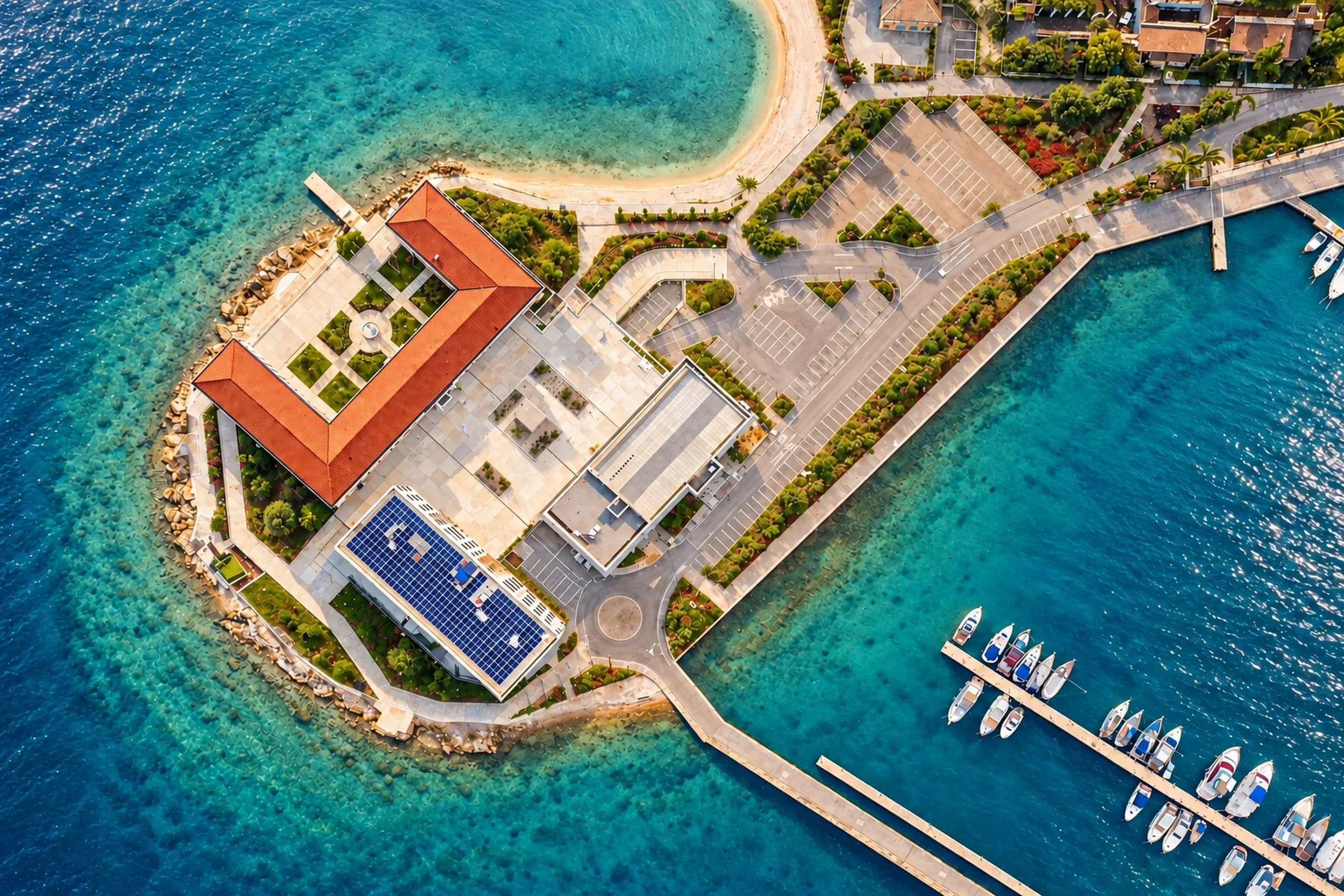
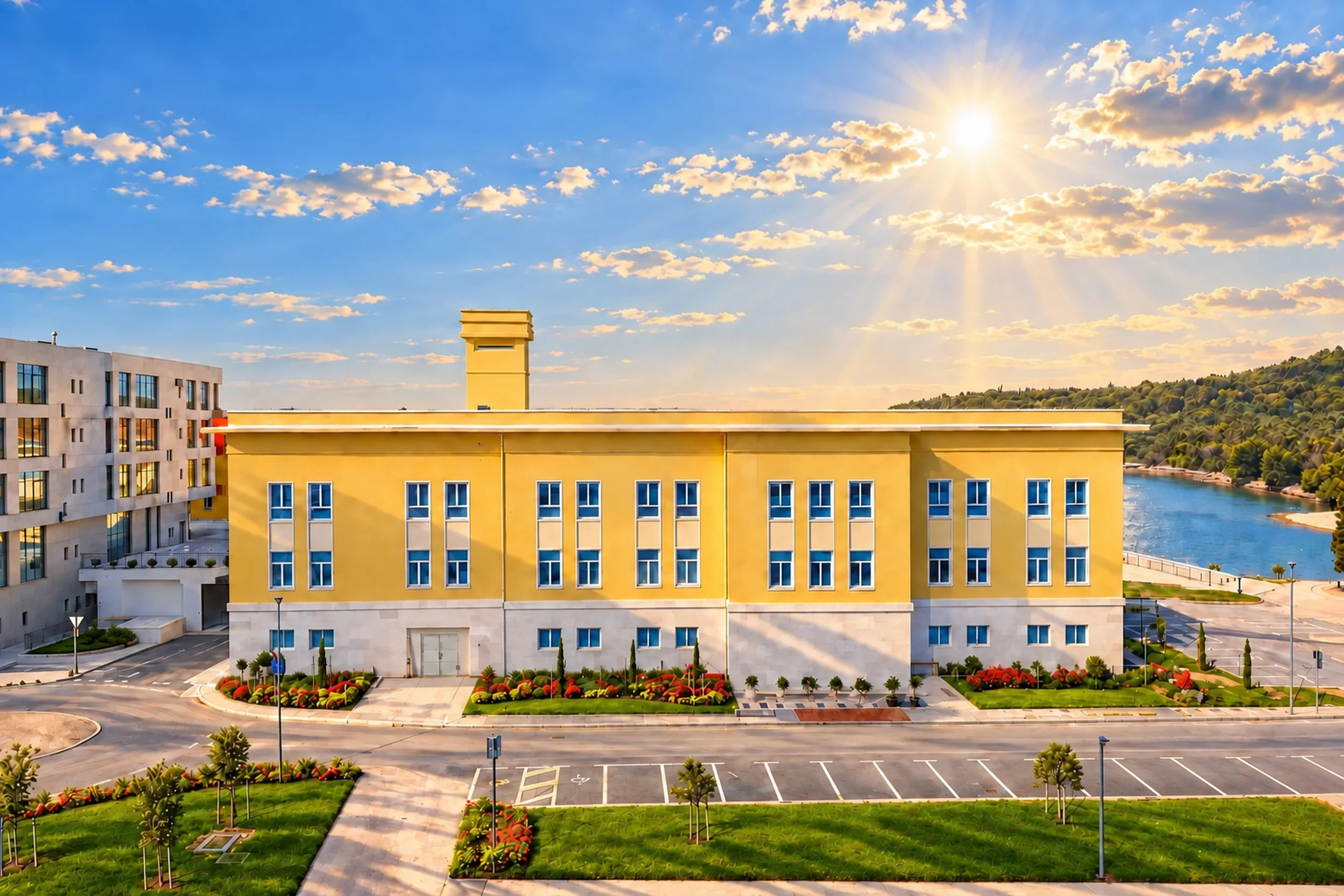
Located within a naturally protected deep bay in Pula, this area has witnessed nearly one and a half centuries of strategic military presence, serving as a guarded naval harbor under a succession of authorities. Today, this once restricted zone is being carefully reimagined through an ambitious urban regeneration initiative, preserving its rich heritage while opening it to a vibrant new future.
A Site Shaped by HistorFew locations along the Adriatic carry such a layered historical legacy. Over the course of nearly 150 years, the Sv. Katarina – Monumenti area served as a strategic maritime and military hub under six different administrations.
Its story began during the Austro-Hungarian Monarchy, when the site functioned as a naval seaplane experimental station, playing a pioneering role in the early development of military aviation in the region. Following the First World War, the location became part of the Kingdom of Italy’s naval infrastructure, housing a submarine training school that operated until Italy’s capitulation during the Second World War. Subsequently, the area passed through the hands of the German Wehrmacht, then the Allied Military Administration, which governed the territory until 1947. During the Yugoslav period, the site served under the Yugoslav People’s Army (JNA) until 1991, after which it was managed by the Croatian Armed Forces until 2003. Today, after decades of restricted access, this historically significant location is entering a new era—one defined not by military strategy, but by culture, tourism, and international collaboration.
The ongoing urban revitalization of Sveta Katarina Island and the Monumenti peninsula represents one of the most important spatial transformations in the region. The project is part of the broader Nautical Tourism Complex Sv. Katarina – Monumenti, an integrated development that combines marina infrastructure, hospitality, cultural spaces, and public amenities. At the heart of this transformation stands the reconstruction and adaptive reuse of a historic building protected under cultural heritage conservation regulations. The structure is being carefully restored and repurposed into a modern congress center, seamlessly integrating contemporary functionality with architectural preservation. With a total area of approximately 2,000 m², the facility spans two levels – ground floor and first floor. Once completed, it will become a key venue within the complex, supporting conferences, corporate events, cultural programs, and international gatherings.